

How construction companies keep LinkedIn going through busy season
A construction company keeps LinkedIn going by posting once a week, rotating five fixed post types, with one named person responsible for publishing. Photos come from a shared folder that crews fill during the work. A month of posts gets written in one sitting, so the schedule continues through busy season.
Why it matters
Why LinkedIn matters in construction
The people who award work use LinkedIn during business hours. Estimators, developers, owner's representatives and purchasing managers at general contractors all have profiles there. When a buyer decides whether to prequalify a company or invite it to bid, a look at the company page is part of the desk check, along with the website and the references. A page with steady, recent activity suggests a company with steady, recent work.
A LinkedIn post will not win a contract, and the page has no need to impress. It has to confirm in under a minute that the company is active and staffed by people who know the work. A page that went quiet fourteen months ago raises a question in the buyer's mind, and a question like that can cost a place on a shortlist.
Construction buyers seldom comment on posts or share them. They read quietly, sometimes for years, and then call. The caller has often read everything. A quiet audience is normal for this industry. Companies that read the silence as failure tend to quit within a few months, as the record is starting to build.
Posting usually stops because it depended on inspiration and on one busy person. A system replaces both. It has fixed post types and a weekly schedule that one person owns, and it runs on photos that come out of the work itself.
The weekly system
Five post types to rotate each week
Assign one person to publish a post each week, and hold the same publishing day. Rotate these five post types in order, so no week depends on a new idea.
-
The project moment
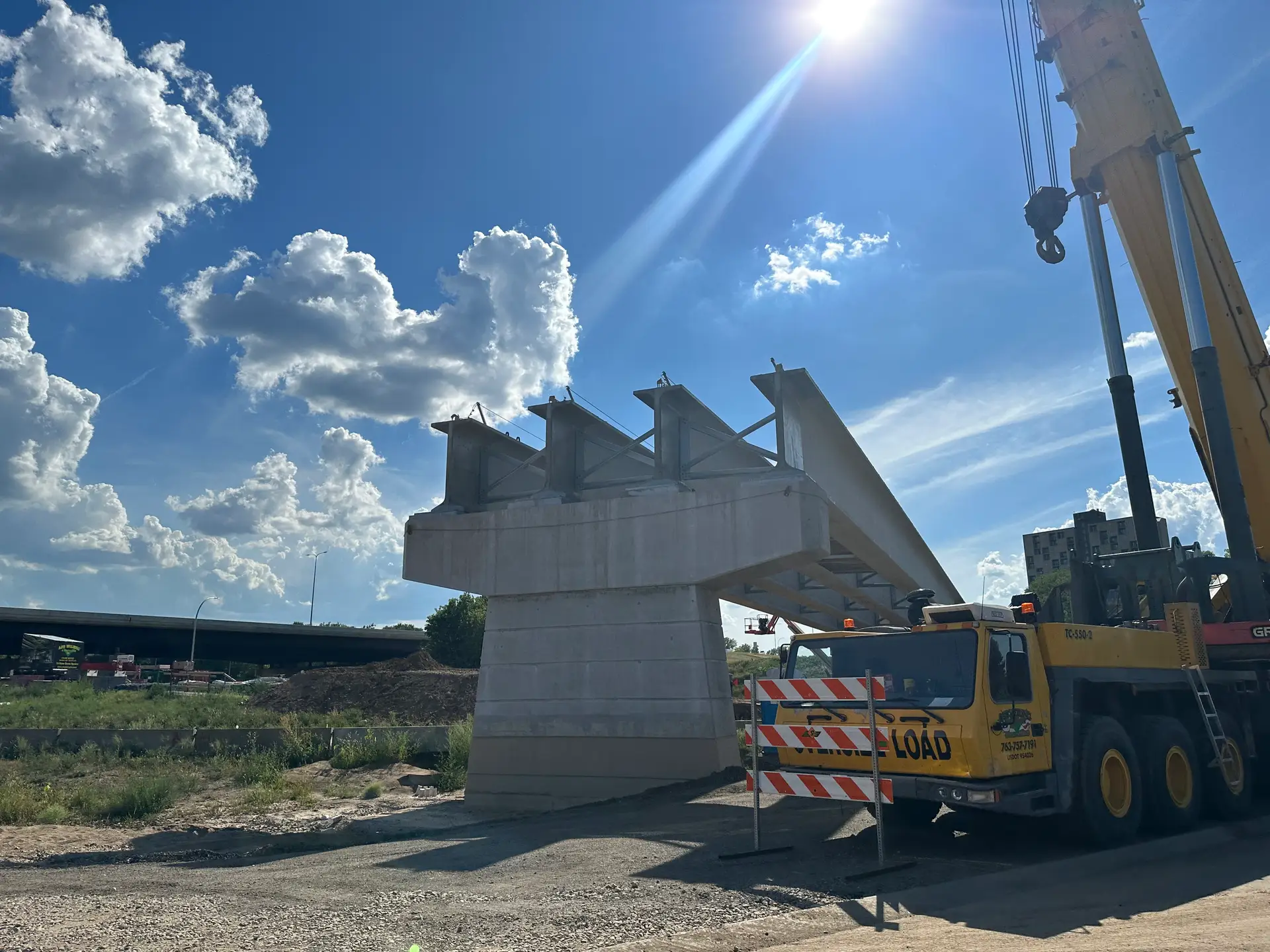
Show work in motion, such as a pick or a load leaving the yard at dawn. The photo is the crane mid-lift or the crew setting the piece, shot wide enough to show scale. Write one or two plain sentences on what is happening and where it is. Add what the piece will carry when the job is done.
-
The person
Feature one employee, named with their permission, doing the work they are good at. Photograph the person at their station or on the deck. Give the name, the role, the years on the job and one specific thing they did on this project.
-
The finished work
Show the completed job, such as an opened bridge or a building in service. Photograph the structure in good light, ideally with people or traffic using it. State what it is and who it serves, then stop.
-
The plain explanation
Explain how something gets made or why a detail matters, such as what a formliner does or what a cold morning does to a cure schedule. The photo is the detail itself, close enough to see. Explain it the way you would to a sharp new hire, in plain words, with each trade term defined.
-
The company milestone
Mark an anniversary, a promotion, a safety record or a new piece of equipment. Photograph the people standing at the thing itself, and skip the logo graphic. State the fact, then name and thank the people who earned it.
Keeping it going
Who posts when the work gets heavy
One person owns the schedule
Give the schedule to one named person, with Friday as the day to confirm the post went up, the same way payroll gets confirmed. The owner's job is to make sure the post publishes on schedule. The writing and the photographs can come from other people. The company has to treat the task as part of that person's job. With an owner in place, busy season changes what gets posted and the weekly post still goes up.
Write a month at a time
One site visit, or one walk through the plant with a phone, can produce four or five posts in an hour: a pick in progress, a person at their station, a finished piece and a detail worth explaining. Write the captions that afternoon, while you remember what you saw. A month of finished posts sitting in drafts gets through busy season. A plan to write something each week usually stops when the work picks up.
Collect photos during the work
Keep a shared folder that crews drop photos into, and use the same short list on each job: the piece leaving the plant, the pick, the crew and the finished work. Photos collected this way cost nothing extra. Hold the quality bar at honest photos and plain words. A clear phone photo of real work, captioned by someone who understands the work, serves this audience better than a stock image with a slogan.
Questions and answers
Questions companies ask
How often should a construction company post on LinkedIn?
A construction company should post once a week and keep that up for a full year. Consistency matters more than frequency, because buyers judge the pattern, and a page that posts weekly for a year reads as a company that finishes what it starts. Add more posts only after the weekly habit has lasted through a busy season.
What should we post when nothing exciting is happening?
Post a plain explanation of routine work, such as how a panel gets stripped or why an embed sits where it does. People in this industry find the work interesting, and so do the people who buy from it. A task that feels routine inside the plant reads as substance to an estimator at a desk.
Should posts come from the company page or from personal profiles?
Use both. A post shared by a person tends to reach further than the same post from a company page, so ask owners and project managers to reshare company posts with a sentence of their own. The company page remains the record a buyer checks during the desk review, so it needs the steady weekly history.
Do hashtags matter on LinkedIn?
Hashtags add little. LinkedIn's search reads the words of a post with or without the symbol in front of them. A long string of hashtags makes a post look like filler. Spend the effort on a clearer first sentence.
Old Plank Group runs LinkedIn for manufacturers and contractors.
Your own staff can run the weekly schedule straight from this guide. If you want it handled for you, LinkedIn is part of our marketing work. Send a note and we answer within one business day.